


Kesyo Mayuzukuri Kuden. (Makeup instructions as handed down)
Kyoto: ca 1690. Calligraphic scroll (20 x 650 cm) in Japanese. With 33 brilliant illustrations, ten in color. Title inscription at beginning and signature of scribe at end. Enclosed in a handsome paulownia wood box certified with seal and signature inside top cover by Sigemi Komatsu, an expert in “old writing.” In excellent condition, with only two small marginal repairs and light discoloration at the beginning of the scroll. Item #15641
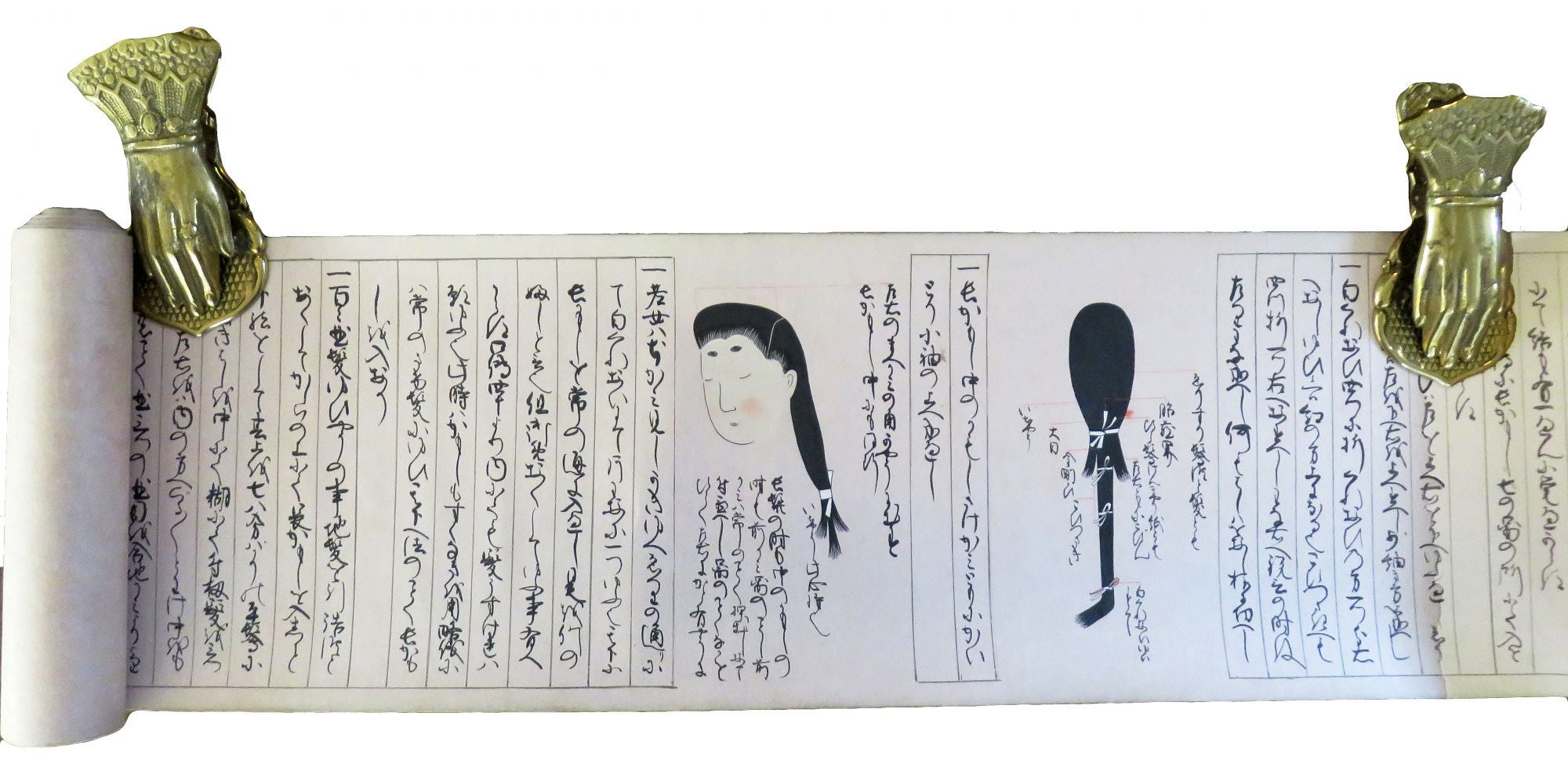
Extraordinary calligraphic scroll, illustrating techniques for a women to achieve beauty in the early Genruko period (1688-1704), the golden age of the Edo period (1603-1867). The desire to be beautiful is the theme of this elegant illustrated manuscript. Women were expected to be made up from early morning until late at night, even while they were in the bath. Depicted here are the secrets for makeup and hair styles (handed down through generations) with explanatory text and outstanding beauty.
Some of the images show the contours of faces applying their makeup. During the Edo period there were basically only three colors for make-up: white for face powders, black for eyebrows and teeth and beni for lips. When women married they were supposed to pluck or fully shave off their eyebrows (“hikimayu”) to hide their natural expression, and replace them with painted eyebrows. They also colored their teeth black, which was an important color in the expression of beauty and splendor. These customs reflected the belief that modesty of expression was a virtue and part of a woman’s proper demeanor.
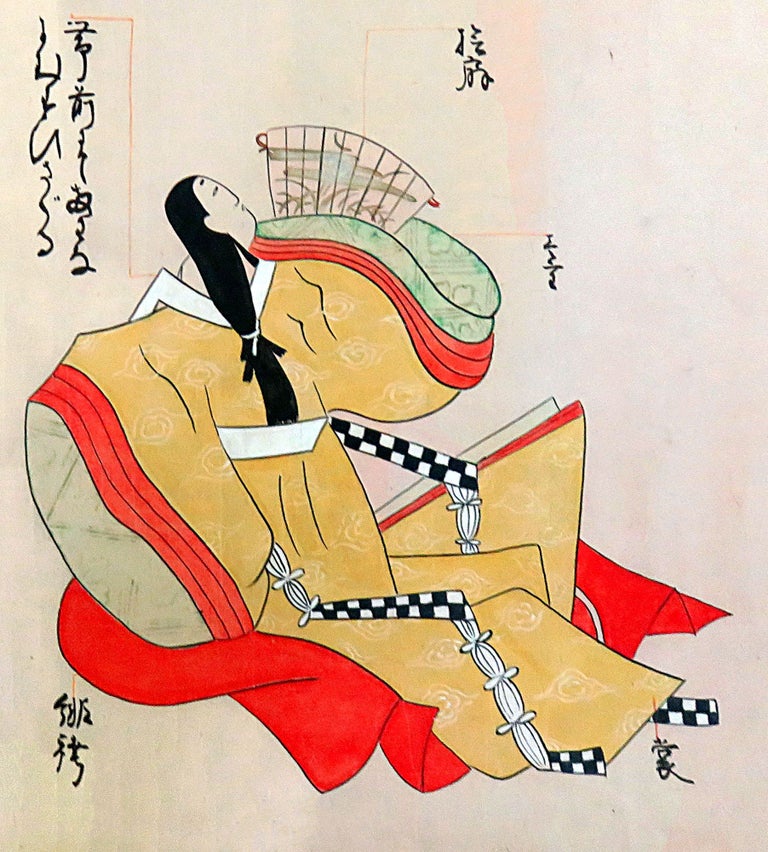
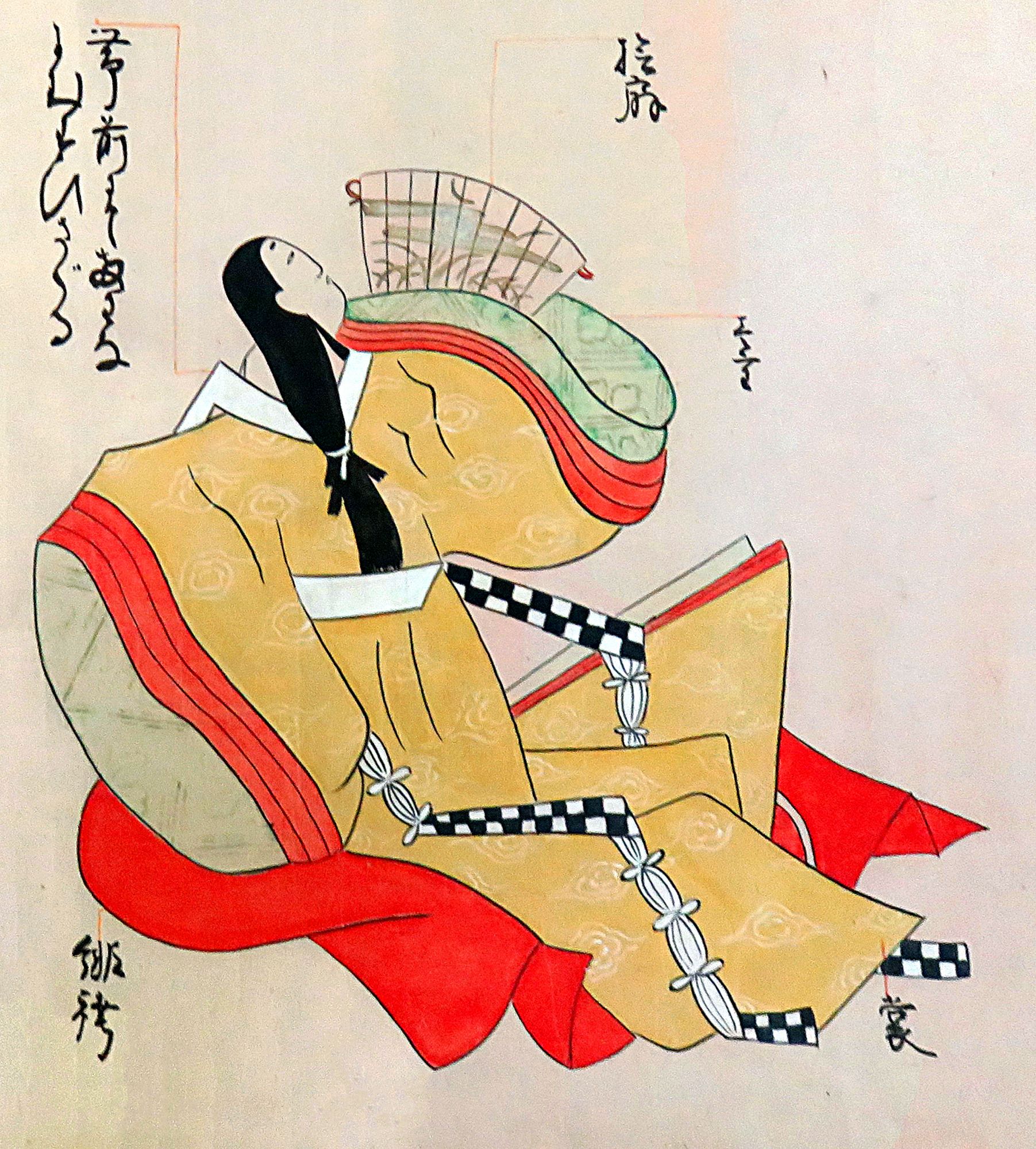
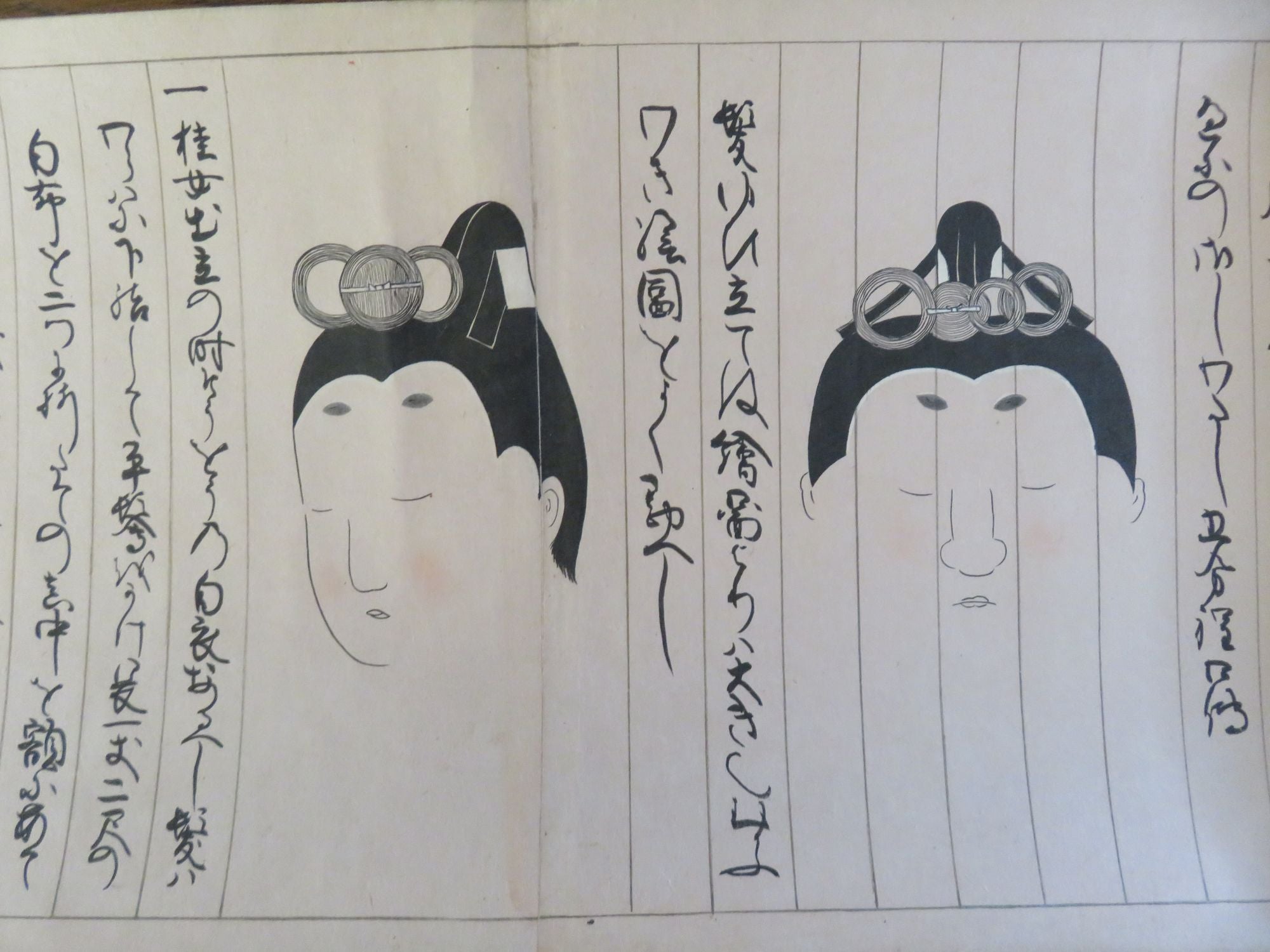
Other images illustrate elaborate hairstyles. The kind of hairstyle a woman wore often indicated her class and marriage status. Two illustrations depict fully-ribboned decorative heads which refer to the ritualistic role of Katsura-Ra-Me, a Kyoto priestess with a white head-dress, who attended brides at aristocratic weddings. Illustrations also include hair pieces, a variety of thirteen makeup accessories, and an delightful figure of a lady dancer dressed in a colorful kimono decorated with braided bands, holding a fan; each part of her dress is described.
Bokuyu Mizushima (1607-1697) was active in the Imperial city of Kyoto and the example of his calligraphy here was based on the noteworthy tradition of Nobutado Kanoe. We have located a later copy (1810) at Waseda University library with fewer illustrations.
Price: $12,000.00